
Root Canal Treatment in Kathmandu
Root Canal Treatment in Kathmandu
If you have severe tooth pain, swelling, or sensitivity that does not go away, you may need root canal treatment in Kathmandu to save your natural tooth. At Agrim Dental Clinic, we treat infected or damaged teeth with careful diagnosis, local anesthesia, proper canal cleaning, and long-term restoration planning.
Root canal treatment, also called RCT, is done to remove infection from inside the tooth, relieve pain, and help you chew comfortably again. Our dentists first examine your tooth and take an X-ray when needed, so the treatment is planned based on the actual condition of your tooth.
RCT Details
Understanding Root Canal Treatment
What Is Root Canal Treatment?
Root canal treatment is a dental procedure used to treat infection or inflammation inside a tooth.
Inside each tooth is soft tissue called the pulp. It contains nerves, blood vessels, and connective tissue. When deep decay, trauma, cracks, or repeated dental work damage the pulp, bacteria can enter and cause infection. This may lead to tooth pain, swelling, gum tenderness, or an abscess.
During root canal treatment, the infected or damaged pulp is removed. The inside of the tooth is cleaned, shaped, disinfected, and sealed. After the root canal is completed, the tooth is restored so you can bite and chew again.
The treatment is not done to “kill” the tooth. It is done to remove infection and help keep your natural tooth in place.
Signs You May Need Root Canal Treatment
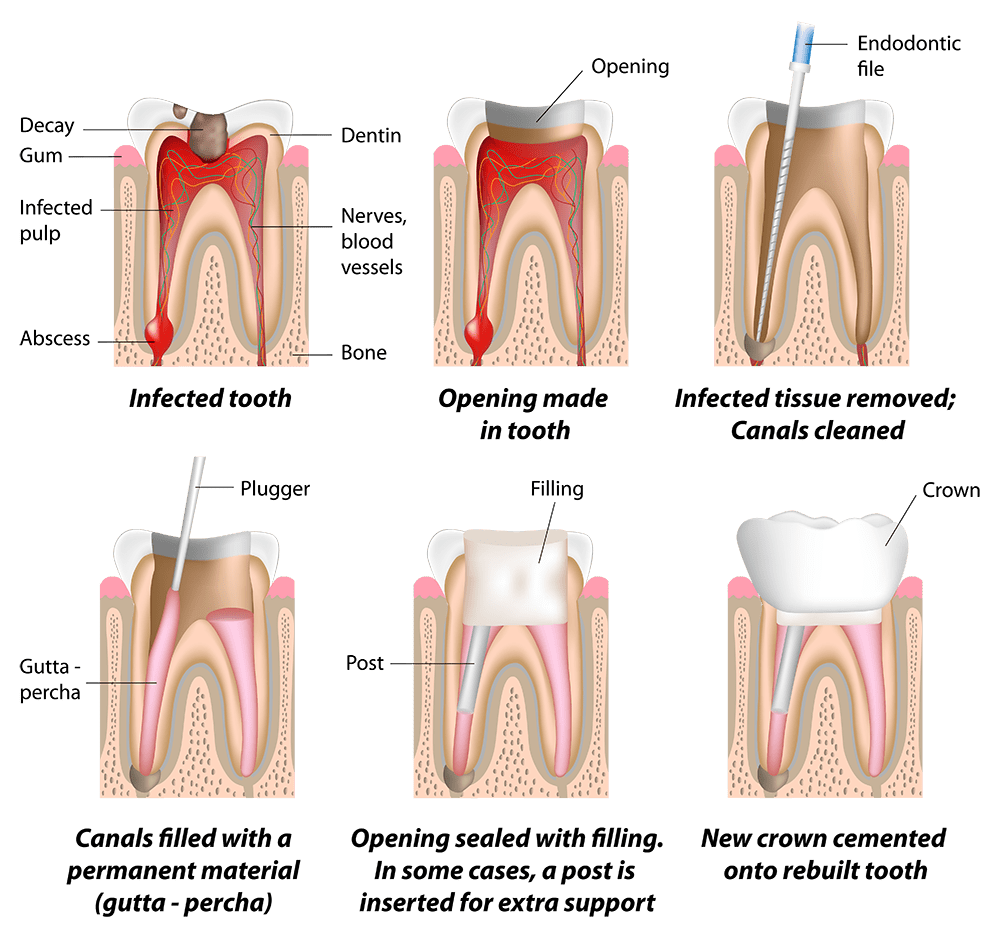
You may need root canal treatment if the nerve inside your tooth is infected, inflamed, or badly damaged.
Common signs include severe tooth pain while chewing or biting, sensitivity to hot or cold that lasts longer than usual, swelling around the gums or face, a pimple-like bump on the gum, pain that spreads to the jaw or ear, a deep cavity close to the nerve, cracked tooth, broken tooth, or darkening of one tooth.
Sometimes, a tooth infection may not cause strong pain at first. That is why a dental check-up and X-ray are important. If there is infection inside the tooth, early treatment gives a better chance of saving it.
Why Choose Us
Why choose us for your Root Canal Treatment?

Choosing the right dental clinic matters when you have tooth pain or infection. Root canal treatment needs proper diagnosis, careful cleaning, and a strong final restoration.
At Agrim Dental Clinic, we first check your symptoms, tooth condition, and X-ray findings before deciding whether RCT is the right option. Local anesthesia is used to numb the tooth and surrounding area before the procedure, making the treatment more comfortable.
Whenever possible, we try to preserve your natural tooth instead of removing it. After RCT, we also guide you on whether the tooth needs a filling or dental crown for long-term protection.
You can visit Agrim Dental Clinic at Ghattekulo or Thamel for consultation, treatment, and follow-up care.
Patient Review
Patient review: RCT and dental filling at Agrim Dental Clinic
Watch a patient share their experience with RCT and dental filling care at Agrim Dental Clinic. Every case is different, so your dentist will recommend treatment after checking your tooth and X-ray if needed.

Our Dental Team
Doctors Who Provide Root Canal Treatment
Meet the dental professionals who help patients with tooth pain, infected teeth, root canal treatment, crown planning, and follow-up care at Agrim Dental Clinic.

Book Your Consultation
Tooth pain usually does not go away permanently on its own when the nerve inside the tooth is infected. Delaying treatment can allow the infection to spread and may reduce the chance of saving the tooth.
If you have tooth pain, swelling, sensitivity, or a deep cavity, visit Agrim Dental Clinic for root canal treatment in Kathmandu at our Ghattekulo or Thamel branch.
Patient Questions
Frequently Asked Questions About Root Canal Treatment
What is root canal treatment?
Root canal treatment is a dental procedure used to treat infection or damage inside a tooth. The infected pulp is removed, the canals are cleaned and disinfected, and the tooth is sealed and restored.
Is root canal treatment painful?
Modern root canal treatment is usually done under local anesthesia, so the procedure is comfortable for most patients. Mild soreness after treatment can happen but usually improves within a few days.
How do I know if I need RCT?
You may need RCT if you have severe tooth pain, lingering sensitivity, swelling, a gum pimple, pain while chewing, a cracked tooth, or a deep cavity. A dentist can confirm it with an examination and X-ray.
What happens if I delay root canal treatment?
Delaying treatment can allow infection to spread, increase pain, cause swelling or abscess, and may lead to tooth loss. Early treatment gives a better chance of saving the tooth.
Is having the tooth extracted an option?
Yes, extraction is an option, but preserving your natural tooth is usually preferred. A root canal allows you to save the tooth, maintain proper chewing function, and avoid shifting of surrounding teeth.
Do you have to see an Endodontist or can a general dentist do the procedure?
Many general dentists can perform root canals, but complex cases are often referred to an endodontist, a specialist trained in treating the inside of the tooth for more precise and predictable outcomes.
How many visits are needed for root canal treatment?
Some cases can be completed in one visit, while infected or complex cases may need two or more visits. Your dentist will decide after checking your tooth and X-ray.
Do I need a crown after root canal treatment?
Many root canal-treated teeth, especially back teeth, need a crown for strength and protection. A crown helps prevent cracking and restores chewing function.
Can antibiotics cure a tooth infection?
Antibiotics may reduce swelling temporarily in some cases, but they do not remove infected pulp from inside the tooth. Root canal treatment or extraction is usually needed to treat the source.
Where can I get root canal treatment in Kathmandu?
You can visit Agrim Dental Clinic for root canal treatment in Kathmandu at the Ghattekulo or Thamel branch.